Alcohol and Tobacco Tax and Trade Bureau – the fun government agency

Alcohol and Tobacco Tax and Trade Bureau leaves out the ‘A’ for alcohol in its initials, (TTB) but as its name suggests, it is a government agency that regulates industries that produce alcohol – wine, distilled spirits, beer and ‘other alcohol’. I have always found their website to be a fairly well organized wealth of information. It has improved even more after a recent overhaul, so it’s no surprise that they offer extensive information on label compliance.

In addition to domestic labels, all labels (or rather a jpeg equivalent) on bottles exported to this country must be submitted to TTB, by the importer, for review and approval, prior to import. The certificate of label approval is known by its acronym COLA. Although the antiquated option remains to submit this application by mail, there is absolutely no reason to do so. For several years it has been possible to register for COLAs Online at www.ttbonline.gov which streamlines the submission process and decreases the waiting time for responses.

All mandatory requirements are available on TTB’s site at www.ttb.gov, and in detail in my book on wine importing. Although there appears to be a little discretion among reviewing agents for layout and design, or perhaps they just overlook things occasionally, they require adherence to the mandatory regulations with the fervor of an Army General.

The mandatory information is clearly spelled out, item by item, font size by font size and there can be no deviation. As if wineries would like to test the rigidity of this principle, I am often presented with labels where, e.g., the Government Warning has all the right words, but it is set out in the way that the printer feels will be the most aesthetically pleasing for the label. I will usually have to go back and forth with the example a few times to show that only the heading can be in bold, the text must ‘wrap around’ (i.e. (2) does not start on another line) and font size minimum is 2mm. Here it is done correctly:

GOVERNMENT WARNING: (1) ACCORDING TO THE SURGEON GENERAL, WOMEN SHOULD NOT DRINK ALCOHOLIC BEVERAGES DURING PREGNANCY BECAUSE OF THE RISK OF BIRTH DEFECTS. (2) CONSUMPTION OF ALCOHOLIC BEVERAGES IMPAIRS YOUR ABILITY TO DRIVE A CAR OR OPERATE MACHINERY, AND MAY CAUSE HEALTH PROBLEMS.

Conversely, no reference to any health benefits from wine can be made, no matter how well substantiated or carefully worded.

As another example, even though a label clearly states the appellation is Western Australia and it additionally says it is produced and bottled by a winery with an address in Western Australia, the label must still include the words “Wine of Australia” or “Product of Australia.” Let there be no doubt!

The word “Sulphites” is a spelling accepted and used routinely throughout the world, but TTB consider this a misspelling and insist on the word “Sulfites.” The European spelling must be deleted. Simply adding the TTB required spelling will not suffice. This applies to other statements made by foreign countries that TTB has stipulated as conflicting with their views, such as a recommended number of drinks per bottle.  

When it comes to the mandatory information, there is no wiggle room. Anticipating potential problems and doing it accurately the first time will save the brand owner, and the importer, headaches and wasted time.

However, nothing can prepare you – including TTB’s own website – for those quirks and idiosyncrasies that will inevitably crop up during the course of any importer’s career. Oh, if you dig deep enough you might find something buried in their periodic rulings and regulations, but often you have to know what you’re looking for or anticipate that a certain turn of phrase or word will be a problem. In the normal course of operations, they’re neither easy to find nor anticipate. Here are just a few of the obscure ones I’ve encountered:

  • The use of “powerful” to describe a table wine in the winemaker’s description. This may be the biggest, baddest Cabernet or Shiraz on the planet, but you may not use this word to describe it, lest it be construed as a fortified wine.
  • Any mention of fortified in the winemaker’s notes, even if it is meant to be helpful and merely to inform the consumer that this particular grape is normally a component of fortified wines in its native country, Portugal. However, in this instance it is used to make a soft, fresh, fruity style of table wine. TTB is convinced that despite the wine’s clear, light color, stainless steel fermentation and its 12% alcohol, the consumer might be misled into thinking that this was, in fact, a fortified wine.
  • Describing a wine as “lively.” This is limited to sparkling wines and, although a wine may be positively dancing off the tongue, if it is not in any way effervescent, with the appropriate characterization and designation, then you cannot use this word.
  • “In Vino Veritas” which was part of a family crest was forbidden, because to declare “In Wine There is Truth” would be to encourage drinking.

This is by no means a complete list of the various issues I’ve encountered, but it’s meant to illustrate the need to take TTB’s regulations seriously, because they certainly will. If you feel strongly that your label has been misunderstood, misconstrued or misinterpreted, there is always the option to upload a letter of explanation with the application as an attachment. This has worked for me in some situations.

Quirks, foibles and idiosyncrasies notwithstanding, TTB is one government agency that does appear to try to make their information easily accessible through constant website redesign, updated sections and requests for feedback. It just takes a little patience, experience and a willingness to suspend disbelief when faced with yet another obscure, but mandatory label regulation or prohibition.

And never, ever let the winery print and attach labels until the COLA is obtained. You just never know when one little word will make all the difference.
Playing the Odds – Winery Email Campaigns

Like most wine importers and distributors, my email inbox is inundated with requests, even demands, for my attention. Buy my wine! Check out my website! See my reviews! And I would bet that my response is mirrored across the country. Click! Deleted!

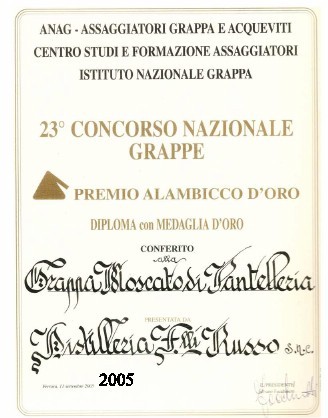
They come from foreign wineries, Google translated from another language, stiffly worded and a little funny in their awkward phrasing. They come from marketers with a superb command of the English language, overly confident that I will love their wines as much as they do and they have obscure awards to back it up. They come from domestic wineries looking to expand their reach, from imported wine brands that have some distribution in the U.S., but are looking for more regional importers.

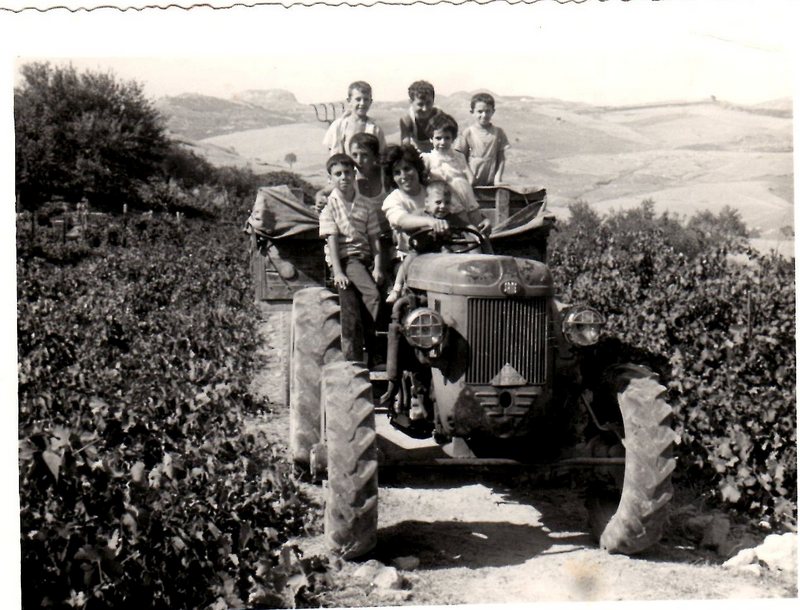
Occasionally, I delve a little deeper. If the email has my name as the addressee (a simple thing, but a big plus), or expresses a specific reason for contacting me, it might prompt me to read. I may be captivated by a vineyard photo that shows a multi-generational family, looking proud and happy. I can be a sucker for the sweet naïveté of their PR efforts. I may see something in the prose that prompts me to check out the price attachment or their website. And once in a great while, I will contact the winery to make a suggestion or forward the email on to one of my clients I think may be interested. But that’s me. Most importers and distributors aren’t consultants and I venture to say that most, if not all, of these unsolicited emails will be ignored and deleted.

A few months ago I received a box of wine out of the blue from Spain. I hadn’t agreed to receive samples from them and unaware it was coming. Inside, there were six beautifully packaged wines from different regions each bottle encased in a decorated metal cylinder. There was also a coffee table size, hardcover, full colour book. And a folder of marketing material. I leafed through the book. Gorgeous, artful photos of vineyards, wineries, landscape, bottles, food. With almost no words. What was I supposed to take from this? I read the accompanying letter. It took me to the website, where there was an invitation to a “virtual tasting” without accountability or stated purpose. I still don’t know what it was about.

Perhaps other recipients of this wine were so impressed by this extravagant marketing exercise they immediately signed up to be importers and distributors. Perhaps they saw the marketing as sophisticated and edgy. I was simply mystified. They had made some crucial mistakes with me:

  • They did not identify whether I was importing new wines
  • They did not identify whether I was interested in importing from Spain
  • They did not identify me!
  • They provided no compelling reason or purpose for the samples
  • They did not follow up in any way.

Eventually I drank the wines, which were actually quite good. I threw out the marketing materials. I recycled the metal tubes and I kept the book. I’m a book lover. I can’t bring myself to dispose of something so beautifully produced. It’s collecting dust on my office shelf.

Focus, specificity and knowing your audience is key to outreach for a winery or wine region organization. An email can work if some research and preparation is conducted beforehand and the communication is personalized and compelling. A personal contact to determine a) if samples are welcome and b) what the desired outcome is, would be advisable. And follow up is essential.  

But maybe that’s just me.


Local Wine Events – Bang for the Buck

In my last post I talked about wineries trying to penetrate the U.S. market using the wine trade event as a vehicle. This topic is directed at the U.S. importer/distributor that has just launched their first brand or brands and is looking for a way to gain local exposure and create buzz.

I say “importer/distributor” because this is a different animal from:

a) an importer who is selling only to distributors. In this case the importer is, or should be, concerned with the big picture. Having brought in a container of wine, the focus should now be on connecting with distributors in different states, forging relationships across a swath of regions and sometimes the whole country. Local events are not going to further this cause and will, in fact, take time and attention to a macro from a micro level;

b) a distributor that is buying their wines from an importer rather than importing their own. They should be concentrating on building up critical mass in a portfolio with broad market appeal throughout their retail territory. Their concern is providing their sales team with sufficient opportunities for sales across a broad spectrum of vineyard regions, styles and price points. Trade shows and tastings will become a factor in their sales programs, but not normally the point of entry to the market for one new brand or a small number of new brands.

The new importer, who is also the distributor in their own state, has chosen to launch their first brands utilizing a ground swell from their home turf. They are counting on developing a local following for their wines and building from there. This importer may also be developing distribution in other states and other ways, but if they have chosen to become a distributor, along with the usually onerous licensing and infrastructure, it is incumbent upon them to start building sales volume locally first. They know this market and its demographic makeup. This importer eats at local restaurants, often has connections to people in other professions and businesses and develops a team of willing friends and volunteers, some of whom become part of a professional sales team.

Which brings me to the local wine event. My mantra, throughout my wine importing book, and in all my wine business advice, is to make every expenditure count. No matter the level of your financial worth or business budget, I see no reason to waste money. If you’re going to do a local wine event, weigh the factors. Does it bring in sales? What is the goal? What is at least a rough cost benefit estimate? Running around town pouring wine for everyone’s wine tasting may make you the most popular person of the moment, but that isn’t the point. You want bang for the buck.


Is the event tied to a retail selling opportunity? If you hold a wine tasting at a local wine bar or restaurant, do they have a retail store, or will someone be in attendance that can take orders, or give a coupon for 10% off at the nearby store if you buy the wine there? Has the store already stocked it? Doing the wine tasting in the hope that the store will purchase the wine if they see enough interest is no sale at all. When a customer comes into the store and finds they have to order it, waiting days or perhaps weeks for delivery, they’ll lose interest quickly. The public is fickle. They may love the wine you poured last night, but if they can’t buy it then and there, or at least the next day, chances are they’ll move on. And they will forget.

Does the event give you exposure beyond the event itself? I’m normally cautious about consumer-only public wine tastings, but at the local level it may be positive exposure. If you sponsor a local golf, tennis or charity event, presuming the expense is manageable, will the local paper and online press give it an extended shelf life? Are there people in attendance who are influential or likely to remember the wine, purchase it for themselves, or recommend it to others? Can you promote it before and after for additional brand exposure? Can you use the event to continue to promote the brand in conjunction with the event’s cause in other settings? Is it likely to elevate the brand’s quality, giving it a ‘halo’ effect by virtue of its association with certain occasions or people?

Whatever the event you choose, make sure you tailor your approach to the setting. If it’s a wine bar or wine dinner, have knowledgeable, professional people hosting, or do it yourself. If it is a sports or outdoor charity setting, think of a theme that will direct attention to your wines and ‘brand’ your brand. Make it entertaining and enhance their experience. Make it memorable. And always have lots of photos taken for the website and Facebook page. Let your retail customers, and potential distribution customers see that you get behind your brand and you are out there promoting it. The website or Facebook page becomes interesting, interactive and builds momentum for the brand. And who knows, a retailer who would not otherwise have stocked your wines may suddenly decide they have to have them.

Wine events can be fun, they can be a great perk to the business and they can help launch a brand when everything comes together. Just don’t lose sight of what you are trying to achieve. Look at what you need to do to maximize your return, so that you can continue to do events and continue to enjoy them because they’re also providing a sales and expansion opportunity.

Wine Events and Their Role in Finding a U.S. Importer – Attracting a Partner is Not about Colorful Plumage

Tags

There are many routes to market in the U.S. This post is about wine events and their role in finding representation.

It never ceases to amaze me that a foreign winery – and this applies to a wine brand owner from any country – will often willingly splurge on an extravagant wine fair, trade show or tasting event without the slightest understanding of what will happen, who is attending and whether it is a beneficial, or even viable, path to finding an importer. I do empathize. If information to the contrary is not readily available to them, the idea of a wine event on U.S. soil seems like a good idea if someone is interested in attracting a U.S. importer. Especially if it appears to be well promoted or is endorsed by a government trade agency. But after event fees, wine samples, shipping, customs clearance, air fare, hotel and food costs, they very often return to their home country with a fistful of business cards and little else. It is a broad brush approach to something that requires focused, careful attention in the planning and equally meticulous follow up.

Let’s take the government sponsored event, for starters. Trade organizations representing countries or regions can be very helpful in sourcing business, pointing the winery in the right direction or providing tips on the U.S. market, but they can also be much more focused on promoting the whole country than the individual winery. Foreign trade organizations on U.S. soil often represent their locally produced food as well and their knowledge and experience within the wine industry may be limited. As such, the event may include seafood or specialty foods, be loosely organized around a collective national identity and not necessarily attracting the right audience. It may fulfill marketing objectives within their annual budget, but end up with event goals that conflict with a winery exporter. On the positive side, they are non-profit and should be more affordable and, if they have been listening to their constituency or consult with experienced marketers with good connections, it could be a well attended event.

An independent wine fair will often be splashier, extensively marketed, well organized, in a desirable location and EXPENSIVE. I’ve seen one show charge as much as $48,000 for an exhibitor’s ‘pavilion’. Even a booth is around $3,000. Whether they attract the right audience and a range of potential partners for a new exporter’s products remains in doubt. Even less certain is whether the exporter will ever recoup the expense for such a costly event in wine sales.

There are wine events, fairs or even conventions that are worthwhile, but it requires investigation and preparation. You cannot assume that if someone in the U.S. is organizing it they must know what they’re doing. You cannot assume their goals align with yours.  

As a winery interested in coming to the U.S. for the express purpose of finding representation for your wines, the questions to ask yourself, or event planners, are these:

When is the event held?

Ideally, it should be on the cusp of seasonal buying times and not directly in competition with high profile events in the same week that will draw trade away

Where is the venue? How expensive is it?

It should be somewhere that attracts attendees, but not so expensive as to make it prohibitive to both exhibitor and attendee. Many events are free to the trade to attend.

Who is invited? What is the caliber of invitee and level of interest?

The organizers should ensure that importers and distributors with interest in adding to their portfolios are the main invitees. These are your customers. Without an importer, you cannot be distributed, but often distributors also have their import license. 

Can you get the list of importers and distributors?

Being able to contact them beforehand to let them know you will be exhibiting and where you will be located is the first step in determining interest. Researching their qualifications will also allow you to make some decisions about whether they might be a good fit for your wines.

How many wineries are exhibiting?

There should be sufficient number and diversity to make this an attractive event and a draw card for invitees.

Are consumers included? What is the trade/consumer ratio?

Sometimes a charitable portion is included, or consumers are invited at higher entrance fees, to help defray costs. You must be gracious and pay attention to this segment but this is not your customer and their enjoyment of your wine will not sell it to a wholesale partner. Your entire objective must be to find an importer, whether it’s someone for one state or fifty. Without that, this is a wasted exercise. Anyone else who tries and loves your wines will not be able to find them for sale and will forget about them shortly after the event, or at least long before you are able to ship wine and establish distribution.

A wine show is just one way to market. There are many others. However, a winery that relies on this venue as their only way to an importer, without doing their homework, is bound to be disappointed. 


Misconceptions – They Float About Like a Persistent Mist

When I started writing this post, I titled it “Ten Biggest Wine Client Misconceptions” but the post was getting so long I renamed it “Five…” and now we’re down to three. I think this will be an ongoing post topic, because really there are so many…and they persist.

I love my clients. They are eager, passionate and ready to plunge into the wine industry with the enthusiasm of adventure seekers who are about to turn a love of wine into a career. They come from all walks of life and their plans and goals are as disparate as their personalities, but they have one thing in common: their desire to enter the wine industry exceeds their knowledge of how to proceed. Okay, two things in common: they usually experience some confusion about what is involved and what it all means. It is no wonder. The U.S. is a quagmire of regulations and a morass of rules. It takes time and experience to begin to understand how to navigate these waters and as they embark on their new venture, they have neither.

These are in no particular order and do not apply to everyone, but are common enough to be included:

#1 Misconception -You can be all things to all people in the wine industry.

In other words, importer, wholesaler, retailer, restaurant, wine bar, tasting room…and so on. At least in most states, with a few exceptions for special circumstances and wineries in particular, you cannot be both wholesaler and retailer. This dates back to the Tied House Rules of England. There are definitions for this law on the ttb.gov site and variations in every state, but in its simplest form its intent was to prevent alcohol sales monopoly. In the UK, this resulted when a brewery also owned the pub and required that only that brewery’s beer was poured and sold, creating a pub that was “tied” to the brewery. Tied House rules were adopted in the U.S. following Prohibition at the same time it created the 3-tier system, which kept each level separate and distinct, in an attempt to avoid monopolies, regulate sales, ensure the collection of taxes and maintain their autonomy from the Federal government.

“Okay,” says one, “I want to be an importer and a distributor and have a tasting room in Washington. Is that okay?” No, it’s not. The importer and distributor are both wholesale operations, so that’s fine, but the tasting room is considered a retail enterprise. “But a winery does it!” Yes, that’s the exception. A winery has an outlet for the sale of the wines they produce, under a different license. You are not a winery. And besides, in the state of Washington you would be a Beer and Wine Specialty Shop with an Add-on Endorsement allowing you to sell tastings as long as at least 50% of your sales are in bottles. Yes, I know it’s confusing, but that’s their law.

That particular client is certainly not alone in his dilemma. It is such a difficult concept to get one’s head around. In fact, none of these laws really make a lot of sense. They sprouted as a reaction to the end of Prohibition, the fear of intemperance and a desire by the States to get their fair share of taxes, and have persisted and grown, like kudzu, as the decades rolled by and pressure was applied from one faction or another on legislatures, to protect their self-interests. We live with it, we build our wine businesses within it, and gradually it gets chopped back to make it manageable and perhaps even workable.

#2 Misconception – The U.S. is one big, happy licensing country

Oh, how I wish that were so! Fifty different states, fifty different sets of laws. Not variations, not detours in one part or another – fifty different sets of laws. It would take forever to go into the differences between Franchise States and Control States and hybrids of each, ones where direct shipping is freely allowed and others where it remains a felony, which state requires reams of paperwork, a 90 day processing period, fingerprinting, a hefty bag of gold and your first born child, and which one has nothing much except a signature (the last one is part of the Wild West – don’t you yearn for those simpler times?)

“I think I’d like to be a distributor in Georgia, South Carolina and Florida for starters.” Um, no. Firstly, you can only be a distributor in a state in which you have a brick and mortar facility – licensed, bonded and replete with all the accouterments that are required to service the state’s retailers, such as salespeople, delivery trucks, warehouse, an office where paperwork is completed and filed, invoices are sent and money collected, etc. You cannot drive willy-nilly across state lines to deliver to other states. That would not comply with their laws and they are unlikely to collect their portion of taxes.

“Well, I’ll set up in South Carolina and appoint someone in Georgia. I called someone from the phone book the other day and he seemed interested.” Good god, no. You must thoroughly vet whoever you appoint in this state. Georgia is one of the more severely restricted franchise states, where you sacrifice your wines at the altar of the state’s distributors and never, ever get them back. That’s only a slight exaggeration. Of course, there are some fine, ethical distributors in this state, but if you appoint a distributor in Georgia and decide they are not doing a satisfactory job, even if they do not sell the wine, even if they do not pay you, even if they set out to sabotage and undermine your brand in the market, it does not matter. The franchise laws protect them. The only remedy in this case is to get a letter of release from the distributor (which they can refuse, or demand compensation), appeal to the GA Department of Revenue’s arbitration or stay out of Georgia for two years.

Yes, it’s a jungle out there.

#3 Misconception – Hey, presto, we find the wine, we bring it in and we sell it

Yes, that’s how I’d like it to work too. Whether we’re a producer, supplier, importer, wholesaler or retailer, we all spend a great deal of time on whatever pursuit is in our purview – growing, winemaking, sourcing, buying, shipping and storing. In the case of the foreign supplier or exporter or the new U.S. importer, they look at the U.S. as one giant conglomerate of wine-drinking potential and say, “300 million people in the U.S. I only have a few thousand cases. That will be a drop in the bucket to that population. Let’s get started” Well, unfortunately this is what every other person before them thought too, with the result that there are millions of cases of wines from all origins, at all price points and all clamoring for attention.

I know these well-meaning individuals all come with the best of intentions – at least the ones who find me. They have connections to the land or the wineries, they love learning about wine, they found remote regions with esoteric wines, or they have a new idea. I understand that. I really do. And it can be done, despite the oceans of wine, because other people don’t plan ahead or they price inappropriately or mismanage their business and they fail. The trick is to take the nebulous image of what someone would like to achieve and turn it into reality. Doing due diligence first and approaching it as a very serious business, not as an idle pursuit where you throw stuff against the wall and see what sticks.

I always advise people to bring in smaller amounts of items that may have a harder time selling, and consider many things like seasons and vintages and their particular market. As an importer, is this the whole country or one or two states? What is the makeup of the state you’ve chosen to set up in as a wholesaler – population, tastes, ethnicity, general wine competition, competition in your region and price point, licensing requirements, for example. What do you enjoy doing? What plays to your strengths? How big or small do you really want to be? How involved? Do you enjoy front of the house or behind the scenes (and this applies to more than restaurants.)

The other factor is time. It takes far longer than anyone anticipates setting up whatever shape this new business is going to take, sort of like when you remodel your house. You have to plan for contingencies. If you are setting up on online selling business, make sure you don’t send your email blast prematurely, promising your customers a delivery date, until you can be assured it is in your warehouse or on its way. If you have a retail store site, make sure all the appropriate zoning requirements and ABC licenses (or state equivalent) are in place before you announce an opening. For importers or foreign wineries, the timeline has to be tracked back to the winery and the negotiations over the wines, purchase prices, quantities, payment terms, currency, to submitting U.S. compliant label graphics for approval by TTB (Alcohol Tobacco Trade Bureau), having wines bottled and labeled, finding suitable ship dates, arranging containers and clearance and getting it into the warehouse. That’s if the wine makes it to port on time, the ship doesn’t hit a snag along the way, or…oh, you get the point. Just make sure to plan for contingencies and tick every box along the way.

I love my clients. They come from every walk of professional life, spanning an age group from mid 20’s to late 60’s. Their experience ranges from none to 30 years in wine retail, with available investment capital from bare bones to bountiful. They live in all time zones from different backgrounds, with big ideas and small. But each and every one wants to start out the right way in the wine business and one of the first steps is clearing away that mist of misconceptions.