Flight of the Concorde

It is exactly 20 years ago this week that I flew British Airways Concorde back and forth from JFK toLondon. I don’t know what made me think of the anniversary. It’s not as if I was marking time to commemorate the event and waited patiently for the right moment. It just occurred to me today, of all days, and from there I went to check the dates on my certificate. My outbound flight was April 24, 1992 and I returned April 30, 1992.

I kept a file of memorabilia, with menus, wine lists, boarding passes, stationary, luggage tag and a grey leather man’s wallet, embossed with the Concorde logo. Flight attendants handed a gift pack on every flight. I gave one wallet to my husband and the other I kept unused and in pristine condition. Gifts also included Belgian chocolates and grey leather portfolios. Grey leather was the signature of Concorde interiors.
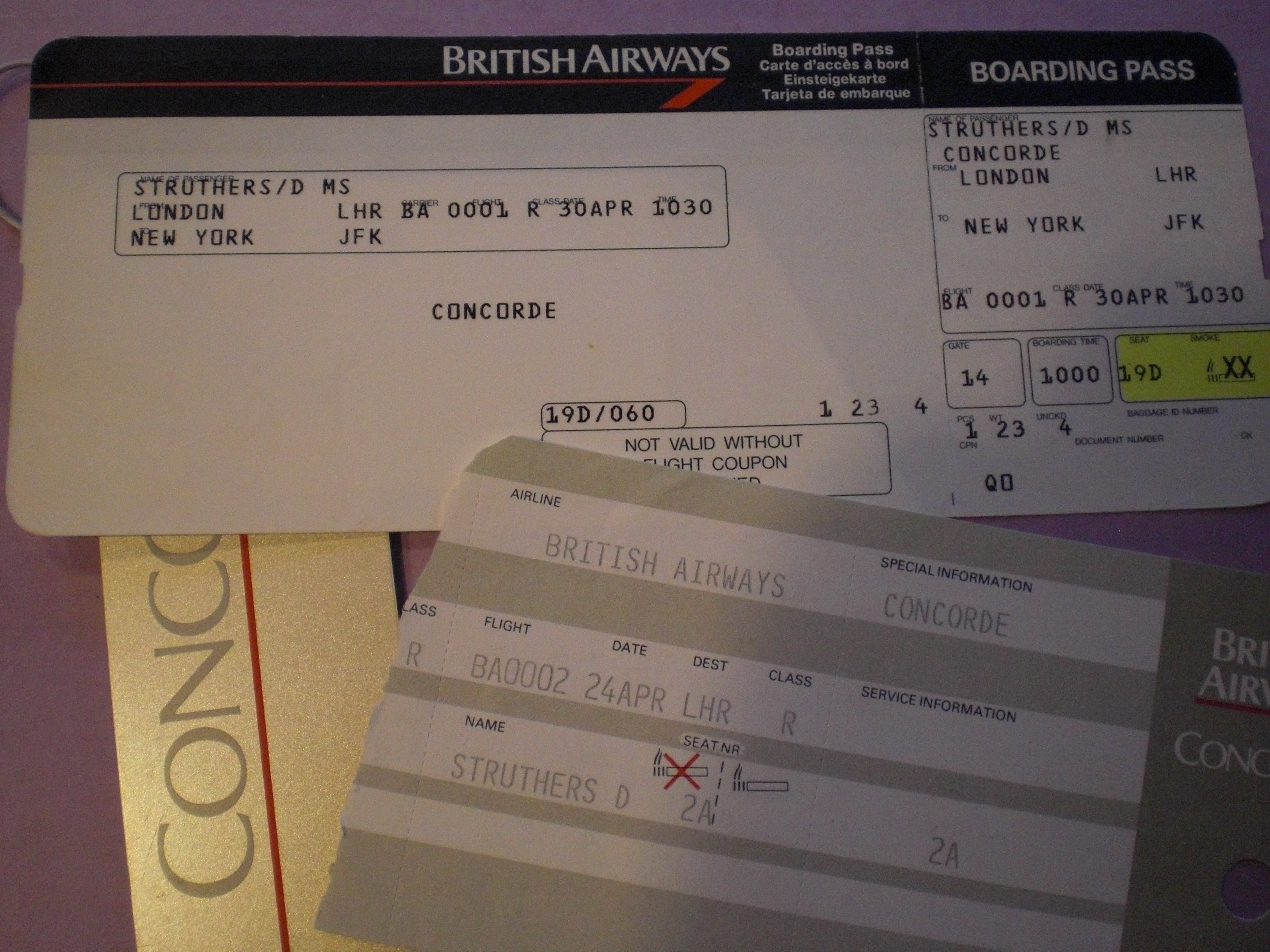
I took a couple of other ‘souvenirs,’ a tiny Wedgewood salt cellar, and the silver plated knife, fork and spoon from my dinner service. No plastic utensils back then. I still have everything. The Concorde is gone now and these are part of my treasured memories.

Menu and wine list

I was traveling alone, having saved up frequent flier miles for this trip, one of my early bucket list items. Somehow, I expected to recognize several of my fellow passengers from the pages of magazines or movies, surreptitiously glancing around in the private lounge before takeoff to catch a glimpse of a familiar face. But it was not to be. I’ve seen more celebrities on the streets of Manhattan. They all seemed to be businessmen, blasé regulars who buried themselves in newspapers as soon as they’d settled in, holding their glass up in a languid hand for refills.

The flights themselves were less than memorable for comfort, with cabin space sacrificed to supersonic flight, but it didn’t matter, at least not to me. It was still a heady experience, soaring into the air at a steep climb and eventually reaching Mach 2 – twice the speed of sound – noted in a lighted display on the bulkhead. Space was more than compensated for with immaculate service from flight attendants, superb food that included caviar tartlets, crawfish, Alaskan crab, excellent cheeses and an exclusively French wine selection. The consultants for the wine selections at that time were Michael Broadbent, MW and Hugh Johnson. Here is a sampling from the 17 wines on the list:
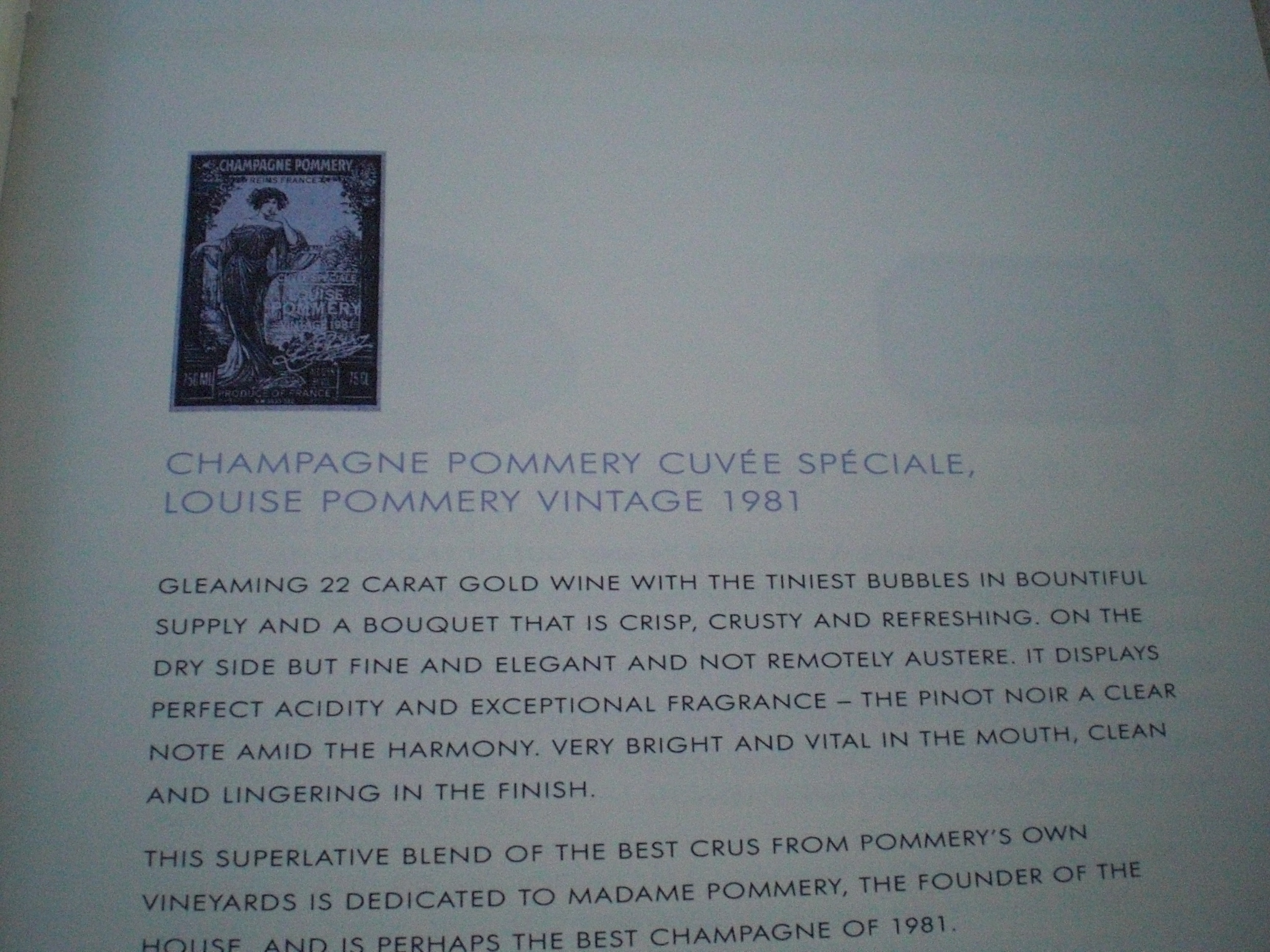
Champagne Pommery Cuvée Special, Louise Pommery 1981

Veuve Clicquot Ponsardin, La Grande Dame, 1985

Taittinger, Comtes de Champagne, 1982 Blanc de Blancs

Puligny-Montrachet 1er Cru, 1986 Labouré-Roi

Domaine de Chevalier 1983, Grand Cru Classé Graves, Léognan

Château La Lagune, 1982, Grand Cru Classé, Haut-Médoc

Château Lynch-Bages 1982, Grand Cru Classé, Pauillac

And Pommard Cuvee Billardet, 1985, Hospices de Beaune, with this description:

British Airways bought this top-of-the-line Pommard at the annual auction of the wine of the Great Medieval Charity Hospital of Beaune in 1985. The warm vintage weather had produced rare intensity of colour, richness of aroma and potency of flavour. Great red burgundy such as this can achieve an almost alarming headiness with such a smooth glide down the gullet that the locals call it “velvet trousers.”

1992 was the start of my wine importing career and in retrospect I wish I’d had more exposure to vintage champagnes and fine Burgundies and Bordeaux before a trip like this, to truly appreciate them, but there is no doubt I appreciated the opportunity to samples wines of this range and caliber. There are those who will say that a plane going Mach 2 at 30,000 feet may not be the ideal environment for the palate, but I could think of no better ambiance for this experience!

Gourmand World Awards

On March 6, 2012 the Gourmand Awards were held at Les Folies-Bergère in Paris, the Grande Dame of old theatres, dating back to 1890. Now in its 17th year, the Awards is the brainchild, and continuing labor of love, of Edouard Cointreau. The Awards and subsequent four day Paris Cookbook Fair are designed to recognize the efforts of cookbook and wine book authors and publishers. In all, there were 163 countries participating for 2011, numbering thousands of entries.  

When I received notice, three months ago, that I had won “Best Professional Wine Book USA” I was stunned. I wasn’t even aware that I had been entered. When I learned that I was short-listed for “Best Professional Book in the World” I was truly gratified, but felt out of my league when I saw the competition from Italy, Czechoslovakia and France. Ultimately, Italy’s “Illustrated Historical Universal Ampelography” won that category, but I came in runner up, which was quite thrilling and wholly unexpected.

Professional World Wine Book Winners

I traveled to France to attend the finalist awards and it was well worth the effort. The evening was a seamless and professional gala with around 1,300 people in the audience of the theater, a red velvet and gilt nineteenth century classic. Hosted by Edouard Cointreau on stage at a podium, it began with wine awards, followed by cookbooks and special recognition for books published to support charitable causes and fundraising. The range of cookbook categories was even more extensive than wine, with exotic offerings from Australia, Patagonia, Malaysia, India, Sweden, Tibet, China, France and everywhere in between. The finalists all looked like books I wanted to read!

At the conclusion, a festive champagne reception was held in the lobby with Grosset champagne from Cointreau’s own family, poured by Le Cordon Bleu students in starched white hats, also part of the Cointreau family legacy. 

Folies-Bergere lobby post show

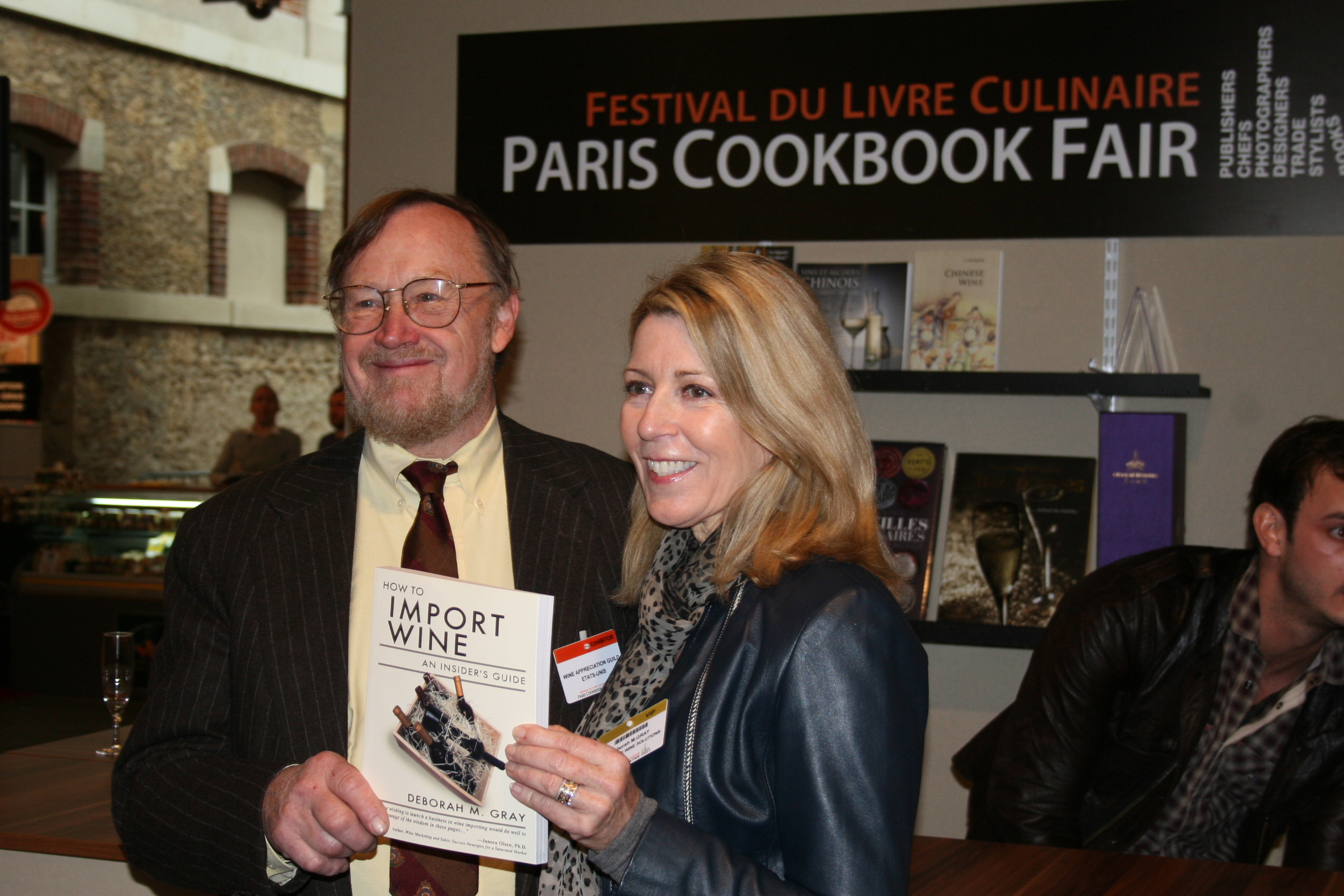
The following day, I gave a talk about wine importing in the USA on the first day of the Paris Cookbook Fair, signed a few books and thoroughly enjoyed myself with a seemingly appreciative audience. I’m sure it didn’t hurt that wine was flowing freely during the talk. 

The rest of the well-attended show was going on all around us – cooking demonstrations with chef celebrities, foreign book rights negotiations, amid displays of new food items and finalists books from the Awards. It had all the feel of a broad market professional book fair in the US, Frankfurt or London, and is certainly a testament to the hard work and dedication of Edouard Cointreau and the staff of Gourmand International and Gourmand Magazine.

Paris Cookbook Fair with the publisher

The experience motivated me to continue work on another book, one I hope will be in contention for an encore performance at the Gourmand Awards, but the next time it would be nice to win Best in the World category so that I can give a speech on stage. I had one all prepared in French, just in case, and I’d like to think it won’t go to waste!

Everyone Has a Story

Part of the appeal of wines has always been the connection people want to make to its origin. Wine regions are picturesque settings, often in exotic locations that conjure up an idyllic image – Tuscany, Burgundy, Bordeaux, Mosel, La Rioja, Napa – to name a few. Entire vacations are planned around these destinations, with the prospect of staying at a quaint inn, touring dozens of wineries to sample their wines and the local delicacies, watching sunsets over the vines and soaking in the local history. 

What happens when your brand doesn’t have history? When you don’t even have a region, much less a vineyard. That isn’t so unusual if you’re a huge brand, sourced from everywhere and sold purely on price. No one expects a story; they expect drinkable wine at a bargain.

But what if you started a new label without all the built-in romance, or the built-in volume distribution channels, but you wanted to stand out from the crowd anyway and find a point of connection?

I was sitting in on a ground floor meeting of just such a brand the other day. The founder is new to the wine industry, she has her inaugural vintage, and is filled with passion for a really unique concept. She knows where she wants to go, but not yet how to get there. There was a lot of brainstorming at that meeting and a good deal of talk about ‘branding’ and telling the ‘story’. The founder looked up uneasily at one point and said, “But we don’t have a story.” I emphatically disagree. I believe there is a story behind every wine brand that can allow it to stand apart, despite a lack of history and regional significance. Perhaps it’s a nascent story that evolves over time, but if there is passion and dedication behind the venture, it can be as compelling as any other.

Stories are really about people after all. Who they were and how the area came to be developed, what influenced the architecture, which grapes they selected for the climate and soils, winemaking choices, generations of families and their struggles and triumphs. Geography is important to the ambiance, of course, but without the individual lives and collective history of the area’s people, it could be any place. 

Holy Expletive came into being because its founder was walking through the wine aisles of Costco one day and the idea came to her out of the blue. Okay, as a beginning it’s a little lackluster. But she didn’t let it rest there. She actually did something about it. Without any experience in the industry, in a very short time she found the right people to make the wine, create graphics and logo, secure the licenses, obtain label approval and build a whole social media marketing campaign. That’s just the start of her story. Some of those who were sitting at the table have already contributed to this enterprise and will continue to move the vision forward and become part of the narrative through their actions and their innovative marketing ideas.  

Holy Expletive wines

But the founder has taken it further and developed a concept around the idea of a label on which anyone could write their own story, and even provided the tools (little black markers on every bottle.) Now we’re getting somewhere and there’s no telling where it will lead, but holy cow, I bet it will make for a good story!

No Pain No Gain…

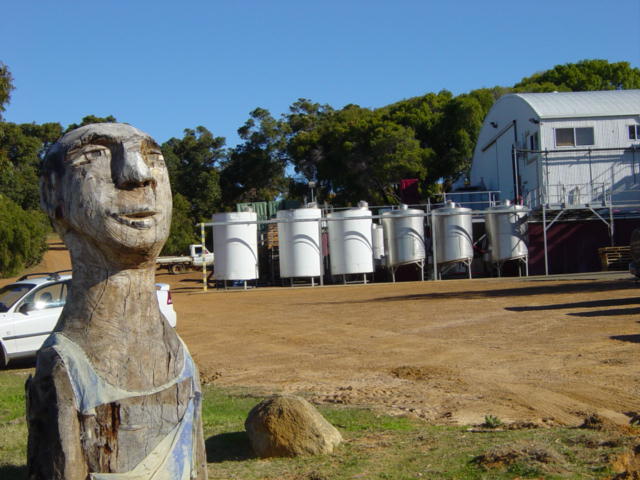
Wine tanks at Western Australian vineyard

I come to this topic with a bit of hesitancy, because whilst I love being the recipient of good news and reviews, I don’t necessarily want to be the one to bring it to everyone’s attention. In this case, “everyone” might not be such a big deal, since my blog is so new its tiny green shoots have barely broken ground. Yet trepidation wars with the necessary art of self-promotion in the current publishing milieu.

When I wrote the first book on wine importing in the U.S., and expanded any previous work on wine sales and distribution, it was with a view to truly giving anyone who wanted to know, a ground level view of how it all worked. I brought my (at that time) eighteen years experience as an importer to bear on the project, but I also researched a great deal before I started, to discover what was out there. Was I really breaking new ground, simply adding to the dialogue or in danger of rehashing old material? Incredibly, I found nothing at all on the subject of wine importing.

It made me wonder. The answer could well lie in its seeming lack of broad appeal. Perhaps it wasn’t considered sexy enough to attract the masses. The current crop of titles includes ideas that titillate and draw the reader into hedonistic pursuit. They promise mouth-watering wine and food pairings, the world’s most expensive wine, the world’s best bargains, uncovering fraud and being invited into Grand Chateaux. 

I also arrived at my own conclusion that the dearth of subject matter had something to do with preserving the mystique of the wine industry and that those within in it were loath to divulge its secrets. I can’t say whether this was from fear of losing cachet or to discourage competition, but the question most often asked of me when I said I’d written this book was, “Aren’t you afraid that if you give away all your secrets you only encourage your own competition?”

The answer to that question and one I truly believe is, “a rising tide lifts all boats.” The best possible way to improve this profession is to provide the newly minted importer with the right tools from the beginning. It also pulls back the curtain on aspects that the average person may find intriguing, and hopefully their curiosity will be rewarded. I left nothing out, held nothing back – at least from my own experience – in my desire to provide a blueprint for anyone who wishes to follow it and I find my efforts have been rewarded. I have been the recipient of many appreciative emails from individuals who seem to have found what they were looking for between its pages.

In addition, I discovered this week that Wine Spectator’s Executive Editor, Thomas Matthews recently reviewed my book for the December 31st issue of the magazine. Since many people do not have a subscription, I have printed it in its entirety below:

How to Import Wine: An Insider’s Guide

By Deborah M. Gray (Wine Appreciation Guild, 328 pages, $29.95)

In a previous life, I aimed to be a wine importer. I got so far as to assemble a group of small Bordeaux châteaus willing to work with me, and had a professional in the field evaluate them.

“These are good,” he told me. “You can probably sell them. How many cases can you get?”

“Two or three hundred cases of each,” I replied.

“That’s a start,” he responded. “But what is your 50,000-case brand? You need that, too.”

That’s when I decided to be a wine writer instead.

I wish I had had Deborah Gray’s book at hand during my wine importing days; I might have saved myself time and money. I’m sure that many other wine lovers dream of becoming wine importers, too. For them, this book is essential reading.

It doesn’t pretend to be a roadmap to success; there is no such thing. But it raises many questions and suggests possible answers that any would-be importer must resolve before success is possible. Gray’s personal story-told in short, often painful, anecdotes scattered throughout the book-give graphic evidence of the value of thinking ahead. Read it as you drink, and make sure you look before you leap.
-Thomas Matthews

                                                         *  *  *

I was struck with the word “painful” Matthews chose in connection with my anecdotes. Were they really that excruciating? Did I suffer so much as I blindly stumbled around in the early and not so early days? Looking back, I can see that I did. I just didn’t know any better. Hopefully, the “pain” I endured, and lived to write about, will help others avoid their own.

Off the Beaten Path

Wine regions are usually beautiful destinations, where vineyard rows carpet scenic valleys and cling to terraced mountainsides, providing inviting vistas. Whether the architecture of the region comprises towering Chateau or squat adobe, they lure the visitor inside to sample what the land has produced and the winemaker has crafted. Despite the occasional tasting room attitude or vin ordinaire, it’s rare that any trip for such a pleasurable pursuit disappoints. 

My favorite discoveries are those made off the beaten path. They are harder to get to, but always worth the effort. They have far fewer visitors so you’re not fighting the crowds, and the owners appreciate the lengths you’ve gone to get there. They may not have a cellar door or tasting room, but the welcome mat is out all the same – as long as they know you’re coming – and they make sure your experience is memorable. They may pop the cork on something special or give you a tour. At the very least you’ll have some quality time with the people who own or run the vineyard, who will happily discuss their wines as you taste through the range at your leisure. I am in the wine industry and because of that I have gotten to know vineyard and winery owners and had the good fortune to be hosted very well at the places I have visited, but in the more remote regions I’m talking about here, everyone is given individual attention and recognition. One of these that definitely fits the bill is Kangaroo Island.

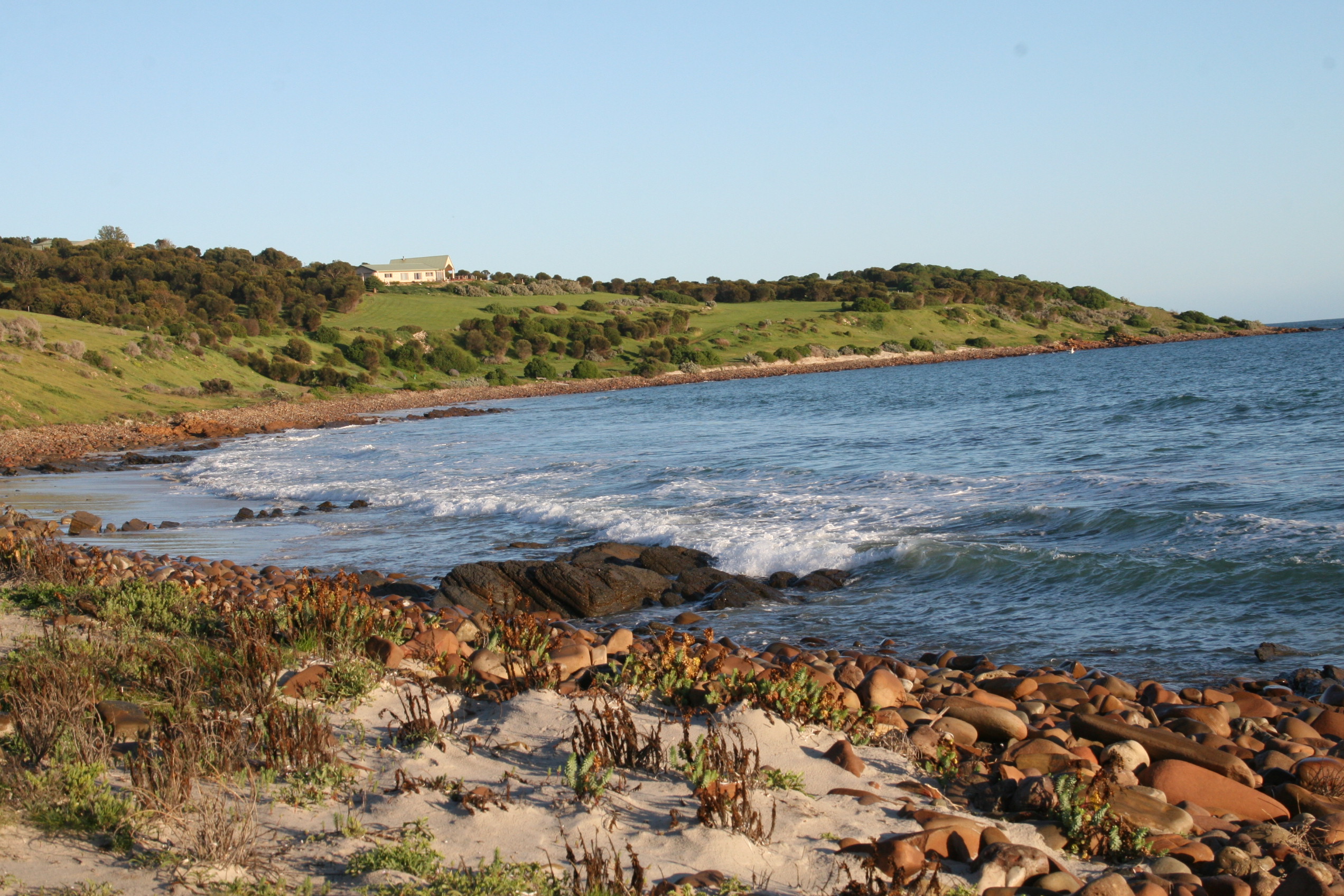
Coastline Kangaroo Island, view from Hazyblur cottage

Kangaroo Island is 70 miles south of Australia and is actually part of the state of South Australia. It can be reached by flight or high speed ferry from the mainland. In ‘recent times’ it was settled by escaping English convicts, hardy whalers and runaway seaman in the very early 1800’s, but aboriginal settlements go back 16,000 years. Today, the permanent population is about 4,400 and the rest is home to unique wildlife and a pristine environment that the locals take great pains to keep intact. Kangaroos are everywhere, but koalas, fairy penguins, echidnas and many other rare and unusual birds and animals can be readily sighted. It is truly a magical place, long isolated from the rest of Australia where species have flourished virtually undisturbed.

sleeping koala

Ah yes, the vineyards! Home to around 25 vineyards, dotted around the island, tucked into protective bays, or providing magnificant cliff views, they are spread out, but still readily accessible due to the size of the island. And of these, Hazyblur has been producing small parcels of world class wines – Cabernet Sauvignon, Malbec, Pinot Gris, Pinot Noir and Shiraz – since 2001.

The owners, Ross and Robyne Trimboli (Ross is the winemaker) know it is a challenge to grow grapes on the island. Aside from constant assault on the vines by grape-loving kangaroos, it takes 10 hours just to get the grapes from vineyard to winery on the mainland, but like the visitors who make the effort to reach the island and sample their wines, they consider it a privilege to be part of the experience.

Budburst, Hazyblur Vineyard, Kangaroo Island

Exploring iconic appellations such as Bordeaux, Rioja or Napa are sure to be memorable trips, but getting off the beaten track can reward the adventurous traveler with wine discoveries that never make their way beyond the borders of the particular region and truly local experiences that are unparalleled. What other obscure wine regions would fall into this category, where the environment and the wines qualify as well worth the effort to get there?